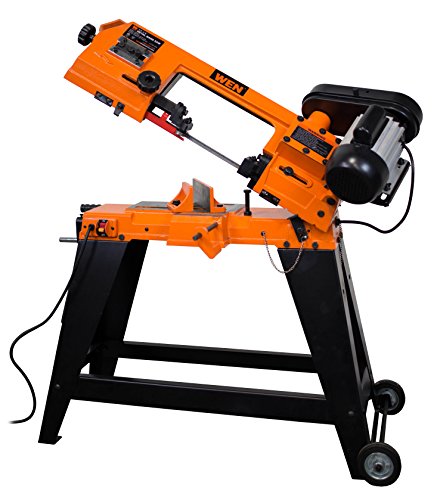
models
WEN BA4555: Compact Metal Bandsaw Buying Guide
The WEN BA4555 is a dedicated compact horizontal metal-cutting bandsaw with a vise. It is relevant to buyers making cutoff work in bar, tube, and similar stock, rather than woodworking curves on a vertical table. This guide interprets WEN’s specifications and the purchasing questions they raise. It does not claim hands-on testing or promise a particular cutting rate in every alloy.
As an Amazon Associate I earn from qualifying purchases. How affiliate links work.
No exact offer was matched for this model. The products below are alternative systems to investigate, not this model or guaranteed equivalents.
Documented specifications for WEN BA4555
| Model | Machine family | Cut height (in) | Throat (in) | Blade length (in) | Blade width range (in) | Offer |
|---|---|---|---|---|---|---|
| WEN BA4555 | Metal-cutting | Not confirmed | Not confirmed | 56.5 | 0.5–0.5 | No exact offer matched |
- Table dimensions
- Not confirmed × Not confirmed in
- Machine weight
- 45 lb
- Blade speed
- 125 / 260 FPM
Dedicated compact horizontal metal cutoff saw; not a vertical woodworking bandsaw.
Speed values are endpoints of a variable range, not two fixed settings.
90-degree round capacity 5 in; rectangular capacity 5 x 4-7/8 in. 45-degree limits are smaller.
Manual lists blade thickness 0.025 in and 8/12 TPI bi-metal supplied blade.
Machine weight from WEN manual; retailer and shipping figures may differ.
What WEN’s published numbers mean
WEN’s manual specifies a 56-1/2 × 1/2 × 0.025-inch bi-metal blade and a 125–260 FPM speed range. It lists 5-inch round and 5 × 4-7/8-inch rectangular capacity for square cuts, with smaller capacities at 45 degrees. The miter range is 0–60 degrees. The manual’s product weight is 45 pounds.
These are metal cutoff dimensions. They should not appear in a woodworking comparison as resaw height, throat, or table size. The distinction matters because a reader looking for a small vertical woodworking saw would otherwise infer capabilities this layout does not provide. Its value depends on holding stock in the vise and making the intended cut within the documented envelope.
Match the vise layout to your stock list
Begin with the lengths and profiles you cut repeatedly. The headline five-inch capacity is less useful than knowing whether your common tube, angle, or bar fits at the angle required. A miter can reduce available capacity, so check the manual’s shape-specific figures before buying for a project near the limit.
Also consider how the stock extends beyond the machine. Long material needs appropriate support at the working height, and the cutoff piece needs a safe support plan. The compact machine footprint does not eliminate the room required by the material. Sketch the full stock path on the intended bench rather than reserving only a rectangle equal to the saw’s base.
Budget for blades that suit the material
The supplied blade gives you a known dimensional starting point, but its pitch may not be the ideal choice for every wall thickness or solid section. Tell a blade supplier the alloy, profile, and thickness of your recurring work. Choose replacements in the exact supported dimensions, and distinguish a spare of the same specification from a different blade intended for another task.
Variable speed is useful because metal applications differ, but the available range should be compared with the recommendations for the actual blade and material. Do not interpret the highest speed as the normal setting for all work. Buying the saw and buying suitable consumables are connected decisions; check replacement supply before committing to a machine that will be needed on a schedule.
Decide whether bench mounting is the right compromise
At this weight, portability means the machine can be relocated with appropriate handling; it does not imply that repeated lifting will be convenient for every owner. A permanent working spot may be the better arrangement. Include stable mounting and room for the head’s travel, controls, and blade access in the plan.
Compare the BA4555 with another dedicated compact horizontal saw when your main task is vise-held cutoff work. Compare it with a portable saw only after adding the portable tool’s required support or base. Those are different ownership packages, and a bare-tool price comparison can be misleading.
Before ordering, verify the exact BA4555 manual and supplied configuration. Keep product weight separate from shipping weight or retailer values, and ask WEN to resolve discrepancies relevant to your bench or transport plan. This model makes most sense when its documented cutoff range covers regular fabrication tasks and you prefer an integrated vise arrangement over assembling a handheld tool and separate adapter.
A useful pre-purchase question for WEN is whether your specific alloy, profile, and miter fit the documented machine envelope with the proposed blade. Supply a dimensioned sketch if the section is unusual. That turns a general capacity conversation into an answer relevant to the part you need. It also gives you a written reference if a retailer’s simplified specifications appear to conflict with the manufacturer’s more detailed manual.
Questions about WEN BA4555: Compact Metal Bandsaw Buying Guide
Is the BA4555 a woodworking benchtop bandsaw?
No. It is a horizontal metal cutoff machine with a vise, not a conventional vertical woodworking table saw.
What blade size does it use?
WEN’s cited manual specifies 56-1/2 × 1/2 × 0.025 inches. Confirm your machine revision before ordering replacements.
Is the five-inch capacity available at every angle?
No. WEN lists smaller capacities at 45 degrees. Use the shape- and angle-specific manual figures for your project.