buying guides
Choosing a Compact Metal Bandsaw for the Bench
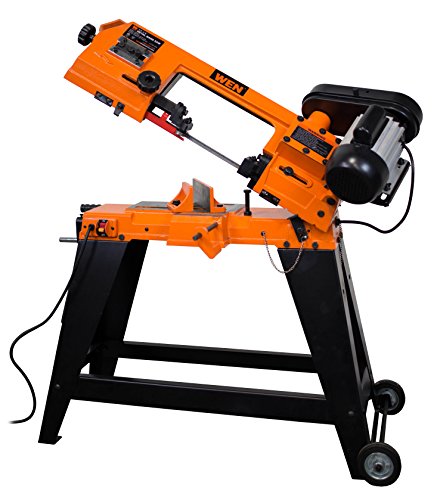
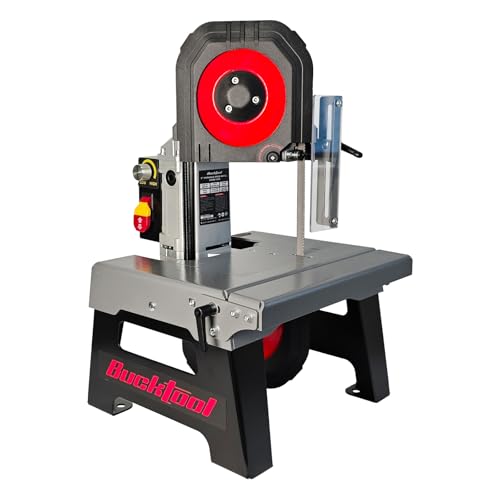
Choose a compact metal bandsaw by the way you need to hold and cut the work. A vise-equipped horizontal machine suits cutoff tasks, while a handheld saw serves portable work. A model-compatible table or pivoting base can change how a portable saw is supported, but it remains a separate accessory system. These categories should not be mixed with ordinary benchtop woodworking saws just because every product uses a loop blade.
As an Amazon Associate I earn from qualifying purchases. How affiliate links work.
Decide whether the work moves or the saw moves
For repeated lengths of bar or tube, a dedicated horizontal layout gives the buyer a vise and a controlled relationship between stock and saw head. For work already installed or too awkward to bring to a machine, a handheld metal saw may be the more relevant category. A vertical table adapter addresses another need: supporting small work against a stationary cutting area.
Make that workflow decision before comparing motors. A powerful handheld model without a vise is not equivalent to a complete cutoff machine. Likewise, a small table attachment does not provide the throat and table area of a conventional vertical bandsaw. List your three most frequent cuts and choose the arrangement that supports them naturally.
Read capacity by shape, angle, and configuration
Metal-saw capacity commonly describes round or rectangular stock at a stated angle. It is not woodworking resaw height or throat depth. A machine can have different limits for square cuts and miters, and a removable base can reduce the capacity available in handheld use.
The WEN BA4555 and Grizzly G0885 are dedicated compact horizontal examples. The VEVOR 5inMGCC1000-4 is a portable saw offered with a removable base, with distinct base and handheld capacities. The Grizzly G0926 belongs to a heavier mobile stand-mounted class. Keeping these labels explicit prevents a five-inch headline from disguising major differences in how the equipment occupies and uses the shop.
Check low-speed capability and blade supply
For metal, verify the machine’s intended materials and blade-speed range in feet per minute. Motor RPM is not the same specification. A woodworking machine with two speeds is not automatically a steel-cutting saw; those speeds may still be intended for woodworking and other explicitly approved materials.
Blade availability should be part of the machine purchase. Record the exact loop length, width, and thickness, then check suitable pitches for your alloys and profiles. Thin tube wall and solid bar may need different teeth. A machine with convenient replacement supply can be easier to own than one chosen only for a high capacity number.
Price the complete station and its compromises
Add the supporting bench or stand, stock supports, suitable blades, and any required adapter. For a handheld saw, include the model-specific mounting system and resolve its instructions against the saw maker’s instructions before treating it as a stationary solution. Third-party fit claims are not the same as machine-manufacturer approval.
Plan the material path at full stock length. A compact base can still need several feet of clear space on each side when cutting long sections. A mobile machine saves effort only if its parking and working locations are both practical. Check access for blade changes and chip cleanup without dismantling the whole station.
Our model guides use manufacturer documentation to explain fit and limitations; they do not report hands-on cutting tests or rank current sale prices. Use them to build a short list by workflow, then verify the exact supplied configuration, current manual revision, and support terms before ordering. The best choice is the complete setup that handles your recurring metal work within its documented limits.
For a practical shortlist, assign each candidate one primary role: fixed cutoff station, movable cutoff station, or handheld cutting tool. Add a separate line for any proposed adapter and write the capacity in that exact configuration. Eliminate candidates that fail the recurring stock or workspace requirement before comparing convenience features. This simple exercise often narrows the choice more effectively than ranking every compact bandsaw together by motor current or a shared five-inch label.
Questions about Choosing a Compact Metal Bandsaw for the Bench
Can a benchtop wood bandsaw cut steel with a metal blade?
A blade change is insufficient. The machine must be approved for steel and provide the required operating conditions.
Is a portable saw with a stand a benchtop bandsaw?
It can form a stationary setup, but it is a handheld tool plus an adapter. Compare its mounting, controls, support, and capacity as a complete system.
What capacity matters for tube cutting?
Check the round or rectangular limit at the intended angle and configuration, then select teeth using wall thickness and alloy.