models
Shop Fox W1878: 62-Inch Blades and Compact Capacity
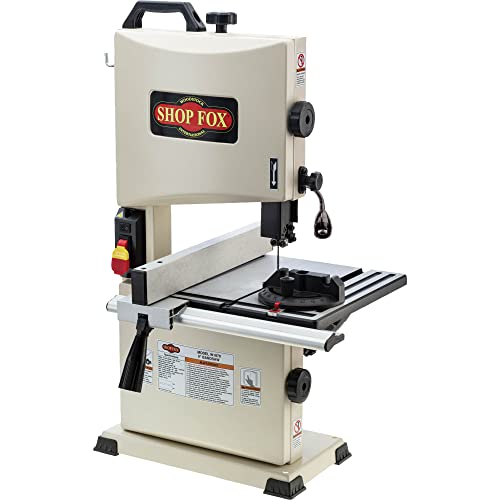
The Shop Fox W1878 is a nine-inch benchtop woodworking bandsaw with a 62-inch blade, ball-bearing guides and a 3-5/8-inch cutting-height specification. It is a different machine from the older W1749 despite their shared brand, 42-pound listed weight and wheel class. The exact model matters because W1749 uses a 59-1/4-inch loop and steel guide blocks.
As an Amazon Associate I earn from qualifying purchases. How affiliate links work.
No exact W1878 offer is retained. The listing below is seller-titled only as a Shop Fox 9-inch benchtop saw; verify its exact model before treating it as relevant.
Documented specifications for Shop Fox W1878
| Model | Machine family | Cut height (in) | Throat (in) | Blade length (in) | Blade width range (in) | Offer |
|---|---|---|---|---|---|---|
| Shop Fox W1878 | Compact woodworking | 3.625 | 8.875 | 62 | 0.125–0.375 | No exact offer matched |
- Table dimensions
- 12 × 12 in
- Machine weight
- 42 lb
- Blade speed
- 2460 FPM
Standard blade 62in; documented range 61-13/16 to 62-3/16in. Throat 8-7/8in; width with fence 5in. No quick-release tension per specification. Distinct from W1749.
Overall 21 x 17 x 29-1/2in; footprint 15-1/2 x 8-1/2in; 2in dust port; miter gauge and push stick listed.
Two cutting-width figures describe different arrangements
The manufacturer sheet lists 8-7/8 inches left of the blade, but only five inches of cutting width with the fence. Both can be correct because the fence arrangement restricts the usable space for that operation. A buyer planning repetitive strips should examine the fence capacity rather than assuming the full throat is available for every guided cut.
For freehand curves, the full motion of the workpiece still matters. A blank can clear the frame at entry and strike it when rotated. Sketch the complete pattern and consider where the waste portion travels. For straight work, start with a stable reference face and enough support to prevent the board from tilting or steering as it extends past the table.
The 62-inch loop distinguishes it from W1749
Shop Fox specifies a 62-inch standard blade and widths from 1/8 to 3/8 inch for the W1878. The older W1749 uses a different loop length, so a supplier's generic “Shop Fox nine-inch” wording is insufficient. Keep the model and blade specification together in your records and check the package before installing a replacement.
Blade width should suit the intended radius, and tooth pitch should suit the stock thickness and material. A blade that fits mechanically can still be a poor choice for the job. If a cut wanders, inspect the blade condition and setup before increasing feed pressure or assuming the machine is defective. A new suitable blade makes a more useful diagnostic baseline than an unknown blade included with a used saw.
Read the controls as a system
The current specification lists ball-bearing guides, rack-and-pinion guide-post adjustment, and no quick-release tension mechanism. It also identifies a fence that is not adjustable for blade lead. Those facts distinguish W1878 from W1749's steel guide blocks and from compact deluxe saws whose main advantage is convenient blade changing or a more adjustable fence.
Learn the setup sequence in the matching manual instead of copying settings from another machine. A tracking change can require fresh guide checks, and a table-angle change should be followed by a squareness check when returning to straight work. Avoid moving several adjustments at once during troubleshooting. A short written record of the blade and symptoms helps identify which correction actually changed the result.
A compact station must remain stable
The documented machine weighs 42 pounds and has a twelve-inch square cast-aluminum table. The sheet lists overall dimensions of 21 by 17 by 29-1/2 inches, a 15-1/2 by 8-1/2-inch footprint and a two-inch dust port. It uses a 1/3 HP motor, 120 V single-phase power and a 2,460-FPM blade speed. Those figures define the installation; they do not demonstrate metal-cutting approval or measured performance at maximum height.
Mount the machine as the manual requires and arrange the bench so the switch remains easy to reach. Include space for door opening and access beneath the table. Long stock needs suitable independent support, while small stock may need a planned carrier or push aid. The carrying handle can help with relocation, but the complete lifting route and secure remounting procedure still deserve attention.
A buying decision for the actual W1878 package
The specification names the miter gauge and push stick among the accessories, while the manufacturer's parts listing identifies assemblies by number. For a used offer, establish whether the guards, fence, miter gauge and hardware are complete. Check table supports and tension controls for damage before giving cosmetic wear much weight. A missing proprietary component can matter more than a worn blade that is straightforward to replace.
Choose the W1878 when the documented opening and fence arrangement fit the work you actually plan to repeat. Consider a different compact saw if adjustment convenience is the main priority, and a larger saw if resaw height or throat depth is the recurring limit. The retained Amazon title says only Shop Fox nine-inch benchtop bandsaw, so it remains model-unverified; preserve the 62-inch blade requirement and do not borrow W1749 specifications merely because the photograph or wheel class looks familiar.
Questions about Shop Fox W1878: 62-Inch Blades and Compact Capacity
What blade length does the W1878 use?
The official standard is 62 inches, with a width range of 1/8 to 3/8 inch.
Why is the fence cutting width only five inches?
The manufacturer separately lists 8-7/8-inch throat capacity and five-inch width with the fence. Use the figure for your intended arrangement.
Does the W1878 have quick-release tension?
The current specification sheet says no. Do not transfer that feature from another similarly sized model.