brands
VEVOR Woodworking Bandsaws: Verify the Exact Model
A VEVOR bandsaw listing can contain a long series of dimensions, motor figures and material claims. The useful task is to connect those details to one identifiable machine rather than combine specifications from similar-looking listings. This guide uses a named official US product page as a reference point and explains what to verify before you compare it, select consumables or decide that it suits a particular material.
As an Amazon Associate I earn from qualifying purchases. How affiliate links work.
Create one identity record
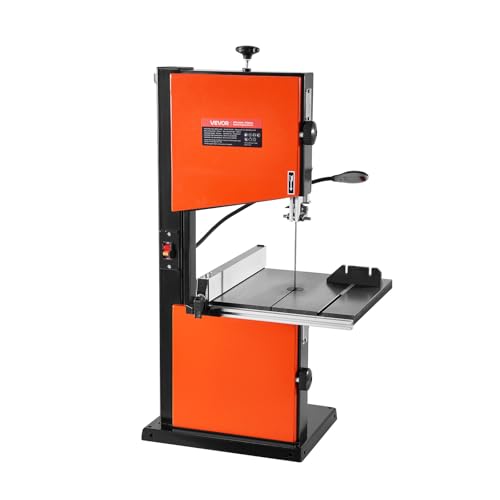
The official VEVOR US page linked below describes a stand-mounted woodworking bandsaw with a 9.65-inch throat, a stated six-inch cutting height and a 370 W, half-horsepower motor. Its title also gives a 72.13-inch blade length and two speed figures labeled 560 and 1100 RPM. These are seller/manufacturer-stated details, not measured results from our workshop. Save the exact product URL and match the delivered machine's plate and manual to it. Do not identify the machine solely by the word “ten inch” in another listing.
Keep headline size and cutting clearance apart
A rounded size class can make two listings sound identical while obscuring the actual measurements needed for a project. Put throat width, cutting height, table dimensions and overall footprint in separate fields. If you want to prepare a particular blank, compare its orientation with the relevant clearance. Add room for the necessary work support. A maximum stated opening is a geometric boundary, not a promise about how quickly a motor will cut every material that physically fits beneath the guide.
Do not compare unlike speed units
RPM describes rotation, while feet per minute or metres per minute describe linear blade travel. Those numbers are not interchangeable without knowing the appropriate drive geometry. If one product page gives RPM and another gives blade speed, ask for comparable data rather than ranking them by numerical size. Preserve the units exactly in your notes. A claim that one machine has a “lower speed” based on mismatched units can lead to a poor material choice even when both individual figures were copied correctly.
Treat material wording as a prompt for verification
The linked listing names woodworking, aluminum and plastic. That wording should not be extended into a blanket recommendation for steel or every nonferrous material. For the proposed operation, obtain the machine manual and confirm the permitted material, the appropriate blade and the specified operating arrangement. Describe the stock's shape and thickness when asking a question. “Can it cut metal?” is too broad to resolve whether a particular alloy, section or setup is suitable for the product you intend to buy.
Check the bundle and installation
A stand in the product title affects what you need to accommodate in the workshop. Verify the contents list for your exact order, including the stand, table accessories and any other pictured items. Measure the assembled setup and plan access for covers and maintenance. Decide how the stock will be supported as it leaves the table. Do not use a shipping-carton measurement as the installed footprint or assume that a product photograph shows every component you will receive. Ask about any difference between the text and images before checkout.
Make parts identification easier now
Before placing the order, ask how the supplier identifies replacement parts for this exact machine. Retain the receipt, product identifier and manual together. If you later need a component, provide photographs and the plate number alongside the part description. Avoid assuming that another machine with the same stated blade length has interchangeable guides, wheels or table hardware. Shared dimensions can help narrow a search, but they do not establish a common mechanical design or an approved replacement relationship.
Judge fit without inventing a review
The published specification can tell you whether a candidate deserves further investigation. It cannot establish measured vibration, fence accuracy, durability or comparative cutting speed. For those questions, seek a transparent demonstration using representative material and distinguish observations from advertising language. If the seller cannot resolve a capacity, unit or model discrepancy, keep it marked as unresolved. A useful buying decision may be to wait for an answer rather than translate an attractive specification into an unsupported claim about real-world performance.
Questions about VEVOR Woodworking Bandsaws: Verify the Exact Model
Are the listed RPM figures the same as blade feet per minute?
No. Rotation and linear travel use different units. Ask for comparable blade-speed data before making a speed-based comparison.
Does the aluminum wording mean it is a steel-cutting saw?
No. Confirm the permitted material and operating requirements in the exact machine manual; do not extend a broad product title to other materials.
Can I buy parts by the ten-inch description alone?
No. Keep the exact product identifier, machine plate and manual together. Nominal size does not establish component compatibility.