accessories
Bandsaw Tires: Choosing Size, Material, and Fit
The right bandsaw tire is a wheel-matched replacement, not merely a rubber or urethane ring of approximately the right diameter. Before comparing materials, establish wheel size, tire width and thickness, and how the original tire is retained. A product labeled for a ten-inch bandsaw may still be wrong for a particular wheel profile. Exact fit should lead the purchase.
As an Amazon Associate I earn from qualifying purchases. How affiliate links work.
Measure the requirements, not a stretched old tire
An old tire can be stretched, worn, or damaged, making it a poor standalone sizing reference. Start with the saw’s parts list and tire part number. Record the wheel and tire dimensions from the manufacturer where available. If aftermarket dimensions are needed, ask the tire supplier what measurements to provide and how they define their listed size.
A tire’s sold diameter may refer to the wheel it fits rather than the relaxed ring laid on a table. Do not reject or approve it through that comparison alone. Likewise, a generic search result showing wheel diameter does not establish correct width or thickness. Those additional dimensions affect the final wheel surface and the available space inside the housing.
Inspect the wheel design before choosing material
Determine whether the original arrangement uses a stretch-on tire, adhesive, a groove, or another retention detail. Follow the machine and tire maker’s compatibility guidance. Rubber and urethane are material categories, not universal installation specifications. Different products can have different requirements even within the same material.
Carter catalogs rubber and urethane options with explicit sizes, illustrating why the individual item matters more than a broad claim about material. A tire marketed as an upgrade still needs to suit the wheel profile. Ask whether the product is designed for your model and whether additional adhesive or preparation materials are required; include those items in the purchase only when specified.
Width and thickness deserve separate attention
A tire that is too wide may require a manufacturer-supported fitting procedure or may simply be unsuitable. A tire that is too narrow may not provide the intended blade support. Do not assume an overwide ring is always preferable because it can be trimmed. The supplier should establish whether trimming is part of that product’s intended installation.
Thickness also changes the effective wheel surface. A visibly thicker replacement is not automatically more durable in service and may alter clearances or tracking behavior. If the original specification is uncertain, get a written recommendation using the model, wheel diameter, wheel width, and photographs. That is more reliable than borrowing the dimensions of a different saw with the same nominal size.
Compare the complete replacement purchase
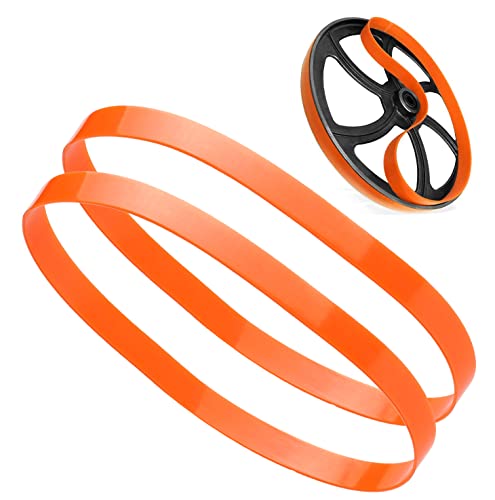
Check whether the listing contains one tire or a pair. Product photographs often show multiple components that are not all included. If the machine has more than two wheels, count the actual required replacements and confirm whether every wheel takes the same tire. Add any specified adhesive and fitting supplies before comparing delivered costs.
Consider support and returns. An exact-fit original part may be a better purchase than a generic kit with uncertain sizing. Conversely, a well-documented aftermarket tire can be useful when the original part is unavailable. The deciding factor should be established compatibility and a credible replacement path, not color or an unverified durability multiplier.
Keep the new tire’s dimensions and product code in the machine record. Photograph the package before it is discarded. If the saw later changes hands, that information helps distinguish an ordinary replacement from a changed tire specification. This guide concerns choosing the right part; follow the specific installation instructions rather than assuming all stretch-on or adhesive tires are fitted by the same method.
When replacing tires on an older machine, ask whether the wheels themselves are original. A previous owner may have changed a wheel or fitted a different profile, making a model-only cross-reference incomplete. Explain that history to the supplier if known. Keep the order conditional on the actual wheel dimensions rather than allowing an attractive brand-specific compatibility label to override physical evidence from the machine you own.
Questions about Bandsaw Tires: Choosing Size, Material, and Fit
Are urethane tires always glue-free?
Do not assume that from the material name. Follow the exact tire manufacturer’s retention and installation instructions.
Can I order using wheel diameter alone?
No. Width, thickness, wheel profile, and retention design also matter.
Does a tire listing include both wheels?
Sometimes it is a pair and sometimes a single tire. Check the stated quantity and whether each wheel uses the same part.