models
WEN BA1487: a floor-saw upgrade, not a benchtop pick
The WEN BA1487 appears here as a floor-standing upgrade comparison. It is not a compact benchtop recommendation. Its larger opening can solve problems that remain out of reach for small machines, but that benefit comes with a substantially different installation and handling requirement. Start with the work you cannot do now, then ask whether this saw addresses it.
As an Amazon Associate I earn from qualifying purchases. How affiliate links work.
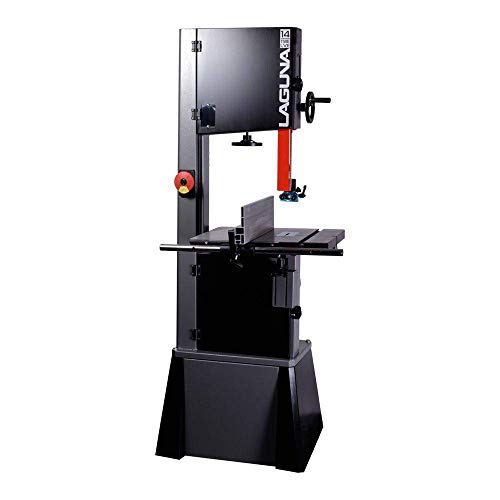
No exact BA1487 offer is retained. The Laguna 14|12 below is a different floor-class machine for category context, not a substitute with matching specifications.
Documented specifications for WEN BA1487
| Model | Machine family | Cut height (in) | Throat (in) | Blade length (in) | Blade width range (in) | Offer |
|---|---|---|---|---|---|---|
| WEN BA1487 | Floor woodworking | 8.85 | 13.375 | 100.75 | 0.125–1 | No exact offer matched |
- Table dimensions
- 18.9 × 15.35 in
- Machine weight
- 130.95 lb
- Blade speed
- 1480 / 3280 FPM
Floor-standing upgrade only, not benchtop recommendation.
April 2026 manual used; product page conflicts on table dimensions and low blade speed.
What changes when you leave the compact class
The April 2026 BA1487 manual lists a 13-3/8-inch throat and 8.85-inch cutting depth. These dimensions allow larger work envelopes than the compact WEN models. The motor rating is 9.5 amps. None of those numbers constitutes a measured resawing test, so this guide does not assign a feed rate or promise a finished surface.
The upgrade is most understandable for a woodworker whose recurring blanks exceed a small saw’s height or frame clearance. It is less compelling when the problem is simply a dull blade or an inconvenient bench. Before expanding the machine footprint, identify whether the current constraint is geometric, mechanical or procedural. A larger saw is an expensive use of space if it only duplicates cuts you can already make comfortably.
Resolve the conflicting published specifications
WEN’s product page contains inconsistent table dimensions and a different low-speed number in its descriptive text. The April 2026 manual specifies 1,480 and 3,280 FPM, an 18.90 by 15.35-inch table and 130.95-pound product weight. This guide uses the dated manual for those fields and preserves the discrepancy as a note.
This is a reason to request the documentation matching the actual machine before planning fitted storage, a support surface or accessories. It is not evidence that every BA1487 has changed in the same way. Production revisions and inconsistent copy can both exist. If a measurement determines whether a machine fits, confirm it with WEN for the exact unit rather than selecting the most convenient number from several listings.
A separate set of blades to own
The specified blade length is 100-3/4 inches, with widths from 1/8 to 1 inch. Your compact saw’s blades do not carry over. WEN lists a tension gauge, circle guide, work light, fence and miter gauge among the package features. Those conveniences are relevant only after the underlying cutting envelope suits your projects.
Consider whether you would keep a small saw for narrow-blade curve work or replace it entirely. Maintaining two saws can reduce blade changes, but it doubles the number of workstations to maintain and store. In a limited shop, a single well-arranged machine may be easier to live with. Estimate actual blade-change frequency before treating a two-saw arrangement as an obvious efficiency improvement.
Plan the move and operating area separately
The manual gives overall product dimensions of 21 by 31 by 67 inches. A permanent position should allow both cutting clearance and service access. Moving a tall machine into that position is a separate problem from whether its base fits the floor. Arrange suitable help and follow manufacturer handling instructions; do not assume a bench-saw moving method scales up.
Mark out the approach to the saw, the route of a long board and the area needed to rotate a wide blank. Include dust collection and the location of other machines that may be in use. A floor saw can save the surface of a bench while consuming more valuable circulation space. That trade is particularly important in a garage shared with storage or vehicles.
A useful threshold for making the upgrade
My buying judgment is to consider BA1487 when you can name several recurring jobs that require its larger opening and have a practical location ready. Occasional ambitious plans are a weaker reason than a demonstrated weekly limitation. It can be more sensible to have unusually large blanks prepared elsewhere than reorganize a small workshop around rare work.
Keep capacity separate from material approval. This remains a woodworking comparison, and its two-speed drive does not turn it into a dedicated metal-cutting machine. Evaluate the whole ownership change: space, handling, blades, dust connections and the remaining finishing process. The best reason to upgrade is a clear improvement in the work you repeatedly do, not merely moving upward through a catalog.
Questions about WEN BA1487: a floor-saw upgrade, not a benchtop pick
Is the BA1487 a benchtop saw?
No. It is included as a floor-standing woodworking upgrade alternative.
Which blade length does it require?
The April 2026 manual specifies 100-3/4 inches, with blade widths from 1/8 to 1 inch.
Why are some table and speed figures different online?
WEN’s product copy is internally inconsistent. This guide follows the April 2026 manual and recommends verifying critical dimensions for the actual unit.