buying guides
Buying a Benchtop Bandsaw in Australia
An Australian benchtop bandsaw comparison should answer local ownership questions as well as compare cutting capacity. The nearest service route, delivery arrangements and the exact regional machine can matter more than a favorable overseas review. Begin with a documented product available through an Australian source, then compare it against the work you intend to do. This guide provides a practical framework without assuming that an international brand name identifies one universal specification.
As an Amazon Associate I earn from qualifying purchases. How affiliate links work.
The Amazon.com offers are comparison examples, not verified local-market offers. This catalog does not confirm that these listings meet Australian voltage, support, delivery or regional-configuration requirements. Use the local model documentation discussed here before ordering.
Read the Australian model page first
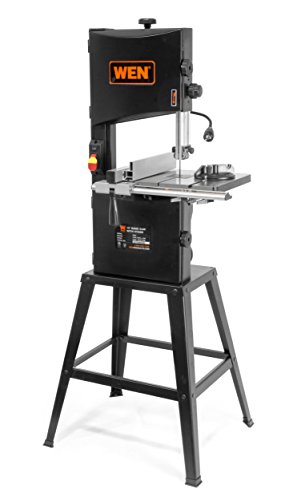
Carbatec's own page identifies its eight-inch benchtop model as BS-B200H. The listed maximum depth of cut is 100 mm, with 195 mm from blade to column and a 1490 mm blade. These are manufacturer-stated measurements for that model, not results of our testing. They provide a useful example of the information to collect for each candidate. Keep the SKU, local source URL and date checked together so that a later listing change does not blur which machine you compared.
Build the comparison in millimetres
Write your representative stock dimensions in one unit system and use the same system across the shortlist. Put throat clearance and cutting height in different columns. Add table dimensions, overall installed size and any access needed around covers or adjustment points. When an imported review uses inches, convert the numbers carefully and retain the original value beside the conversion. Do not round a critical fit measurement upward. A workpiece that only just fits on paper is not a good basis for assuming an easy or comfortable operation.
Resolve specification inconsistencies
The Carbatec page currently displays more than one weight figure in its specification area. That is a reason to ask which figure describes the assembled machine and which describes packaging before planning a lift or support. Do not silently select whichever number is more convenient. The same approach applies to any seller page with conflicting motor, blade or size details: send the model number and the discrepancy to the supplier, request clarification, and save the answer with the purchasing record.
Plan service access around your location
Ask where technical questions and repair requests are handled for your postcode. A national online listing does not tell you whether an assessment happens locally, by collection or through a service center elsewhere. Ask how a damaged delivery should be documented and whom you should contact before assembling a machine with visible damage. These are practical purchasing questions rather than assumptions about the quality of a particular brand. Clear answers let you judge the ownership arrangement alongside the headline specifications.
Check the electrical configuration of the actual unit
Obtain the electrical requirements from the Australian documentation for the machine you will receive. Do not transplant voltage, frequency or current figures from a similarly named overseas model. If a proposed installation or an imported unit creates uncertainty, ask the manufacturer and an appropriately qualified electrical professional to resolve it. Treat a travel adapter as irrelevant to verifying motor compatibility. Your shortlist should identify a suitable local configuration before you spend time comparing convenience features or optional accessories.
Budget for a working saw rather than a carton
List what the workshop already provides: a suitable support, space for the stock, an extraction system and access for maintenance. Then identify what the chosen package actually includes. Verify a pictured fence, stand or hose adapter against the written contents list. Keep optional upgrades separate from items required for the intended setup. This makes a local package comparison useful even when retailers show different bundles or delivery terms, and it avoids treating an accessory you will never use as a decisive saving.
Match the purchase to repeatable work
Choose two or three realistic jobs and write down the material, largest dimensions and frequency. A saw bought for occasional thin patterns faces a different workload from one expected to prepare thick stock every weekend. Ask the seller to explain the fit between those jobs and the documented machine. If a project exceeds the listed clearance, remove that candidate before debating motor branding. When several machines fit, local support, installation and a clear supply of compatible consumables can provide a more defensible decision than an unverified online ranking.
Questions about Buying a Benchtop Bandsaw in Australia
Is an eight-inch bandsaw able to cut eight inches thick?
No. Nominal size is not cutting height. Carbatec lists 100 mm maximum depth for the BS-B200H, separately from its throat clearance.
Should I use overseas electrical specifications?
No. Verify the local unit and its documentation. Similar product names do not establish identical electrical configurations.
What if two official specifications disagree?
Ask the supplier to identify the correct value for your unit and keep the response. Do not choose a figure silently when it affects fit or installation.